Projects
Substructure Detection in Heterogeneous 3D Data Types
Unsupervised segmentation and substructure discovery across diverse volumetric and point-cloud datasets
Overview
This project focuses on substructure detection and segmentation in heterogeneous 3D datasets, including volumetric reconstructions and point-cloud representations derived from different experimental techniques.
The primary objective is to develop a generalizable and modular framework capable of identifying hidden structural patterns without relying on supervised labels or domain-specific tuning.
Problem Statement
Modern experimental datasets often exhibit:
- high dimensionality and large data volumes,
- heterogeneous data representations (voxels, point clouds, grids),
- noise, artifacts, and uneven sampling density.
These factors make traditional rule-based or supervised segmentation approaches difficult to apply consistently across datasets.
Approach
The developed framework:
- Ingests multiple 3D data formats and representations
- Performs preprocessing and normalization tailored to each data type
- Extracts geometric and statistical features from the data
- Applies unsupervised clustering and density-based segmentation methods
- Evaluates segmentation quality using data-driven criteria
The pipeline is designed to be modular, allowing rapid adaptation to new datasets and experimental conditions.
Methodology
Key methodological components include:
- Point-cloud and voxel-based data handling
- Feature extraction from local neighborhoods
- Density estimation and clustering for substructure separation
- Visualization of segmented structures in 3D space
This approach enables discovery of previously hidden substructures without imposing strong model assumptions.
Technologies Used
- Python
- NumPy, SciPy
- scikit-learn (clustering and unsupervised methods)
- 3D data handling and visualization libraries
- Jupyter Notebook / modular Python scripts
Results
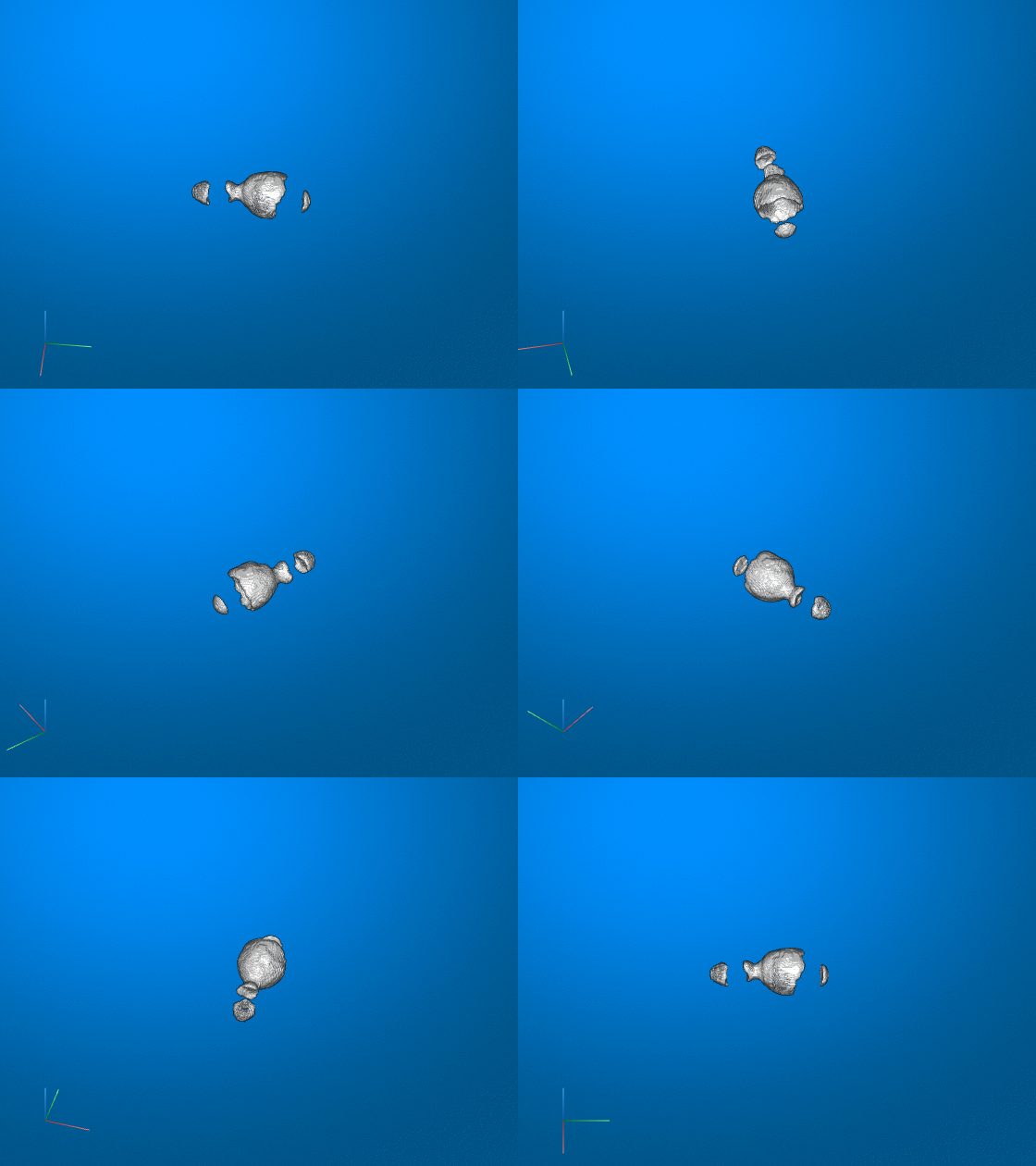
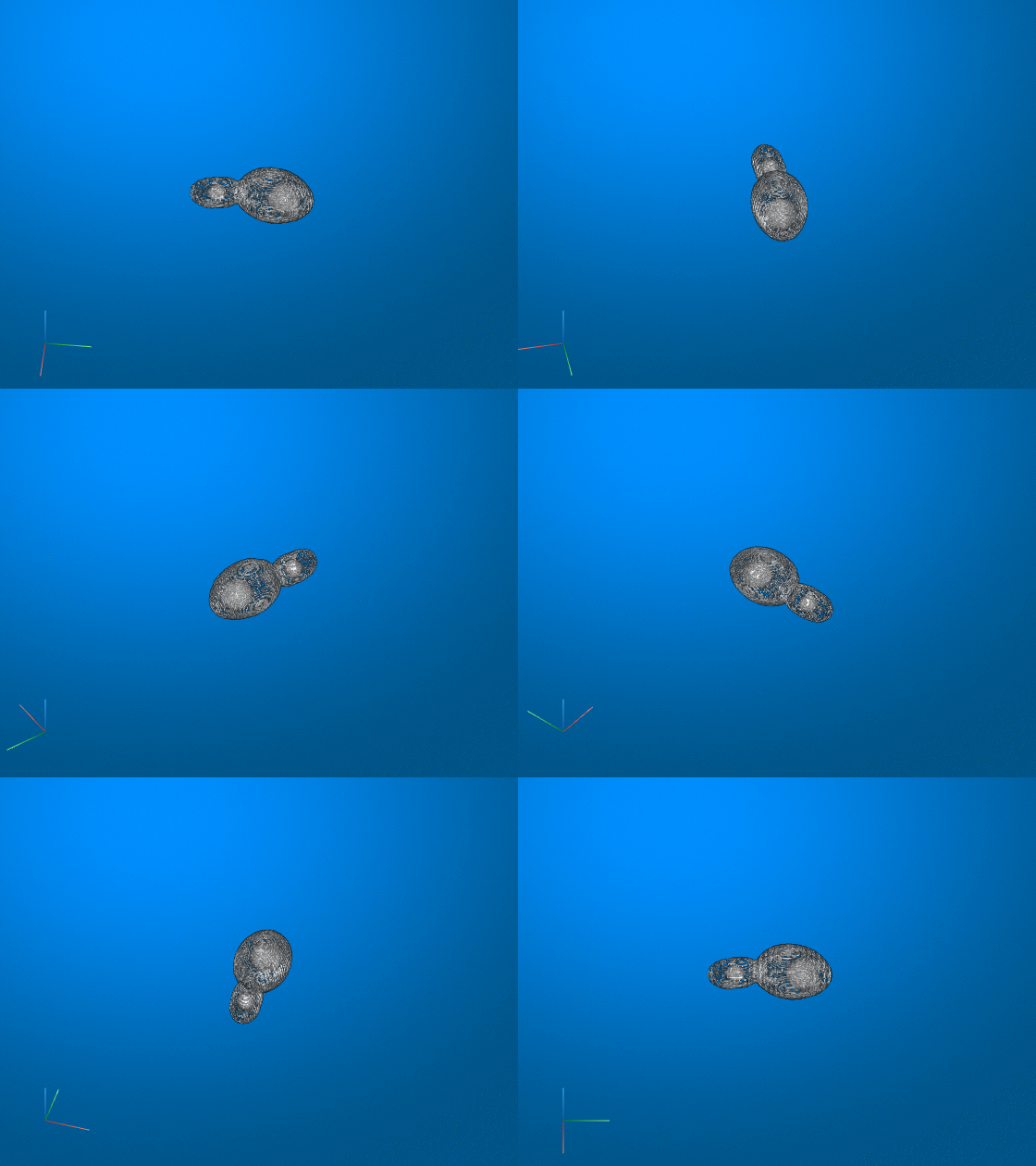
- Successful segmentation of complex 3D datasets across multiple data types
- Identification of distinct substructures in noisy and heterogeneous data
- Demonstrated robustness of unsupervised methods for real experimental data
Applications
- 3D tomographic data analysis
- Biological and materials science imaging
- Point-cloud segmentation and structural analysis
- Exploratory analysis of large-scale experimental datasets
How to Run
- Clone the repository:
bash
   git clone https://github.com/mohdrafik/Substructure_Different_DataTypes
Practical setup and Results